About SYNTHETIC TENNIS FLOORING
Here's a comprehensive guide to tennis court construction, incorporating the best aspects of the provided information and addressing potential issues:
1. Site Selection and Preparation:
- Choose a level area: This minimizes earthmoving costs and ensures proper drainage.
- Consider sunlight and wind: Aim for a location with adequate sunlight exposure and minimal wind interference.
- Prepare the ground: Clear the area of debris, vegetation, and any obstacles. Level the ground and ensure proper drainage.
2. Type of Court:
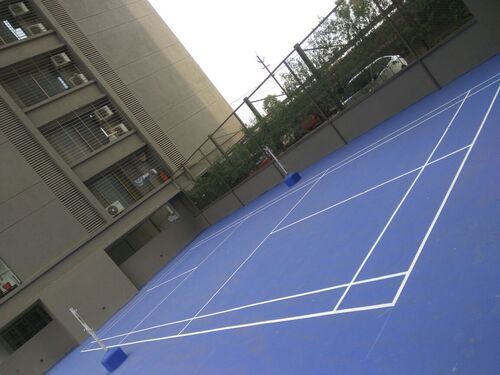
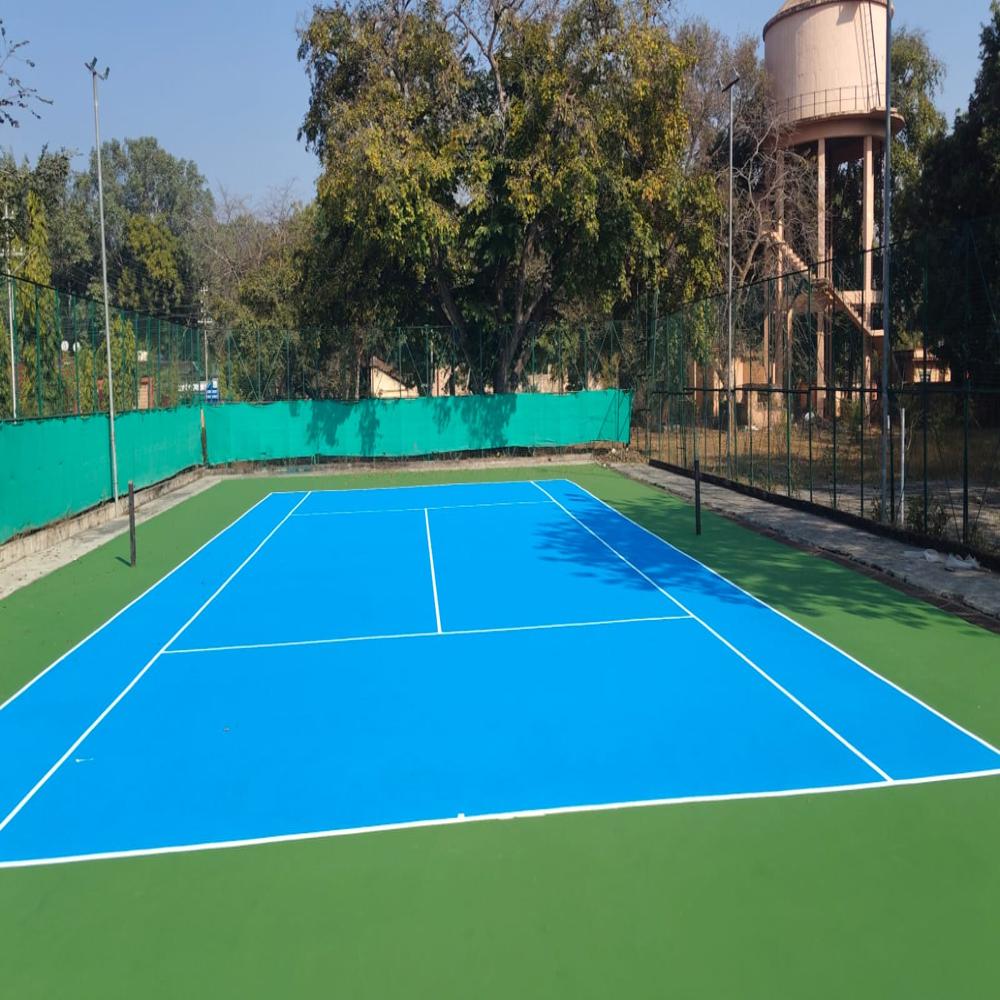
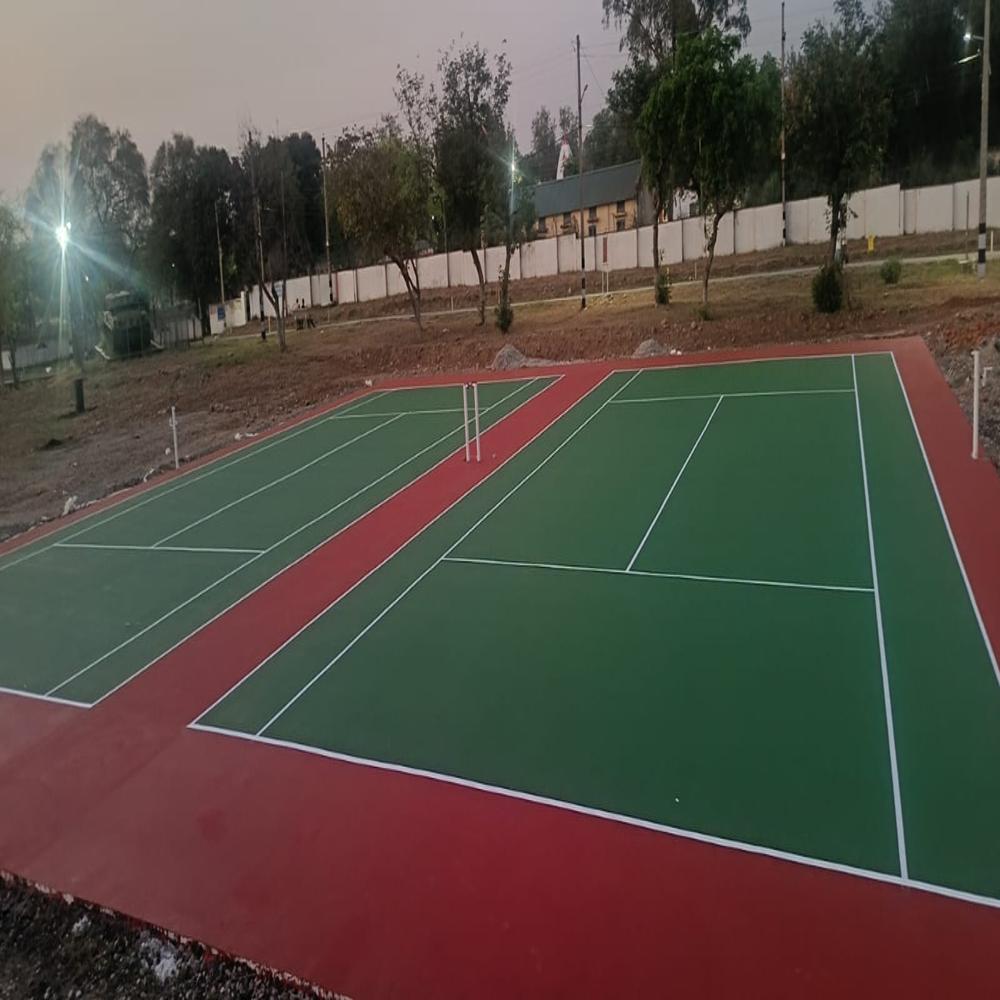
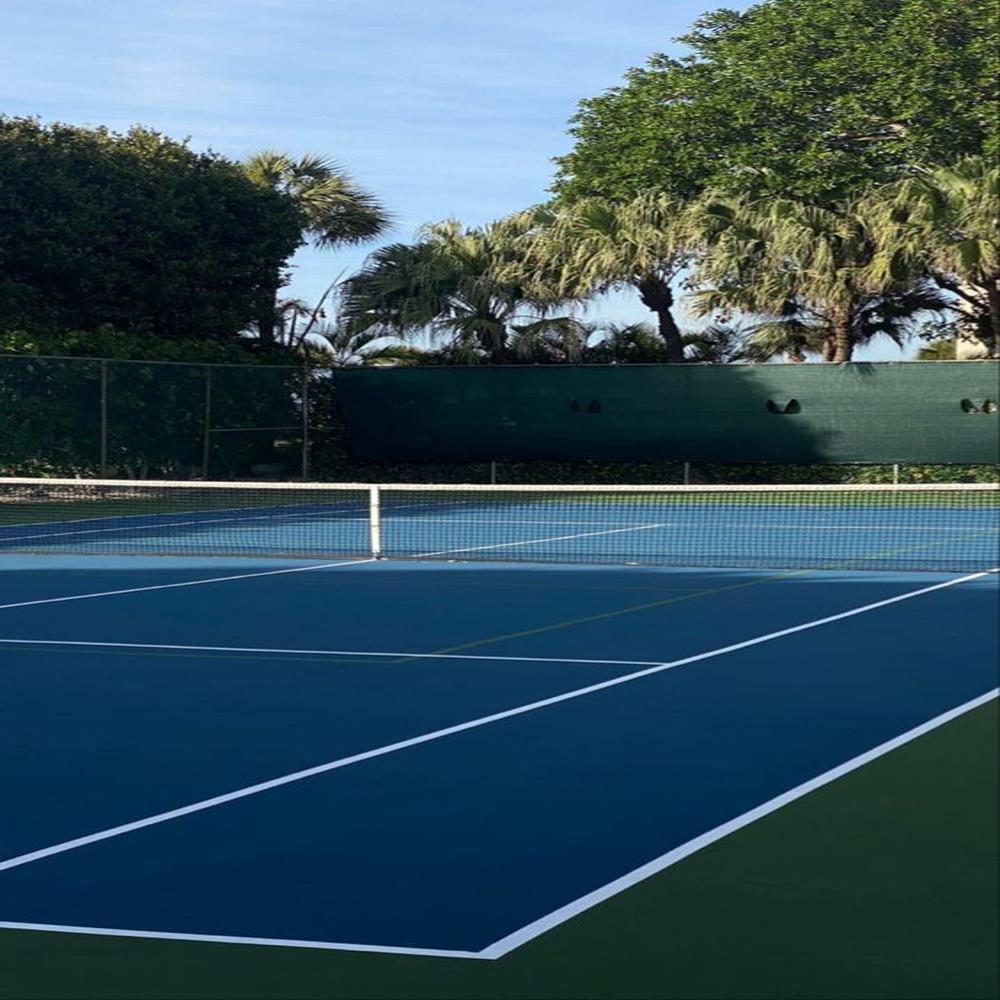
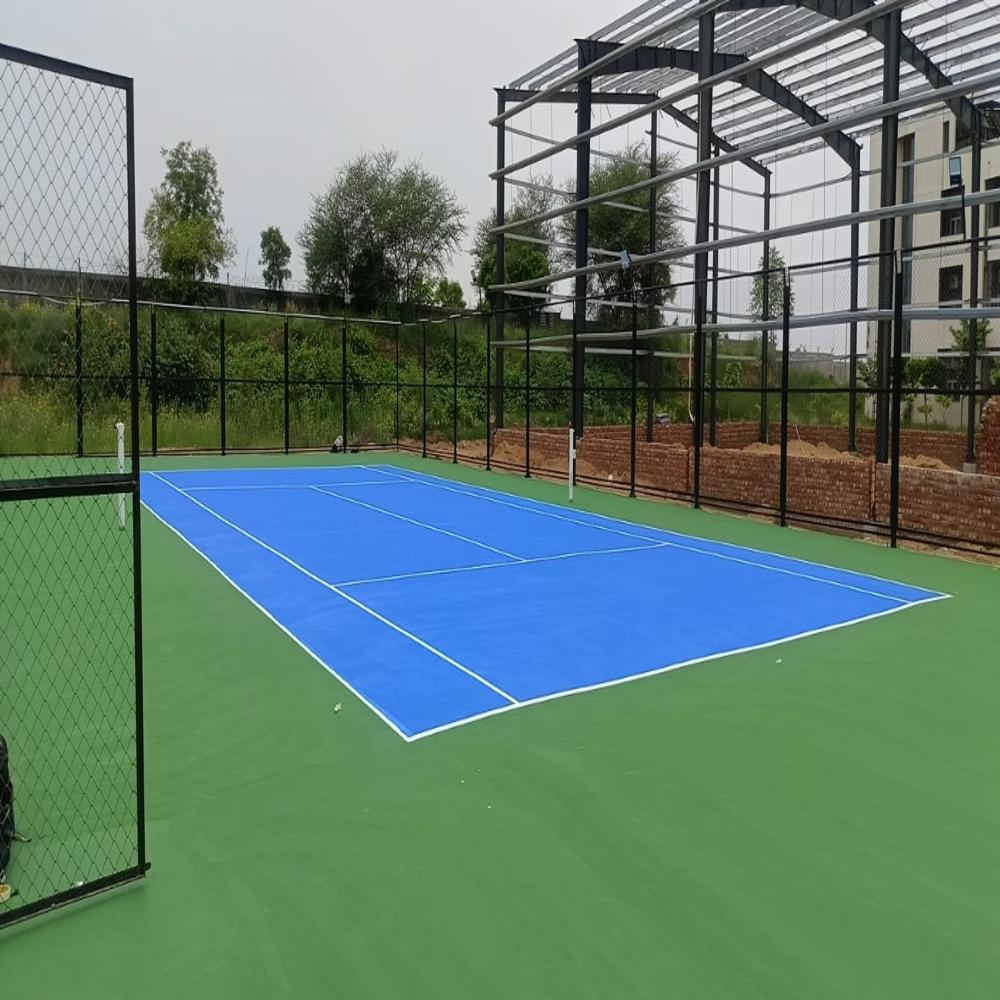
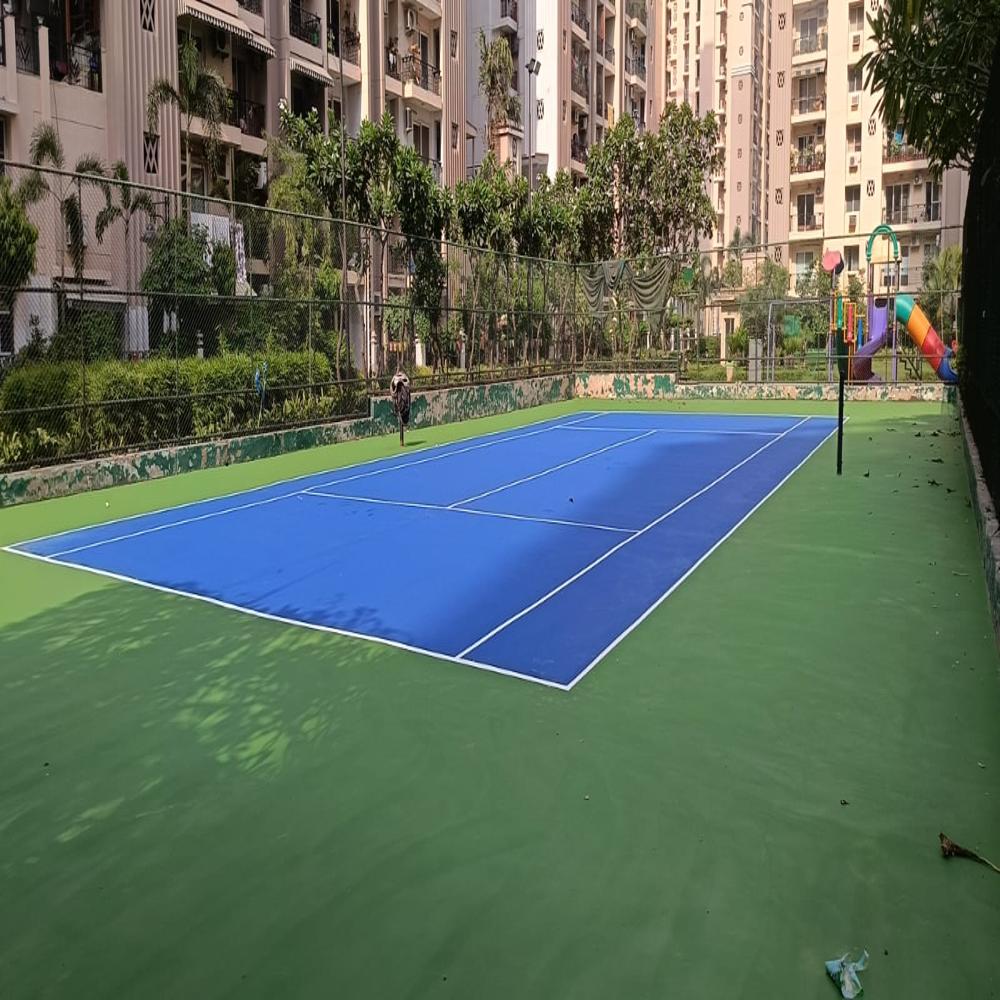
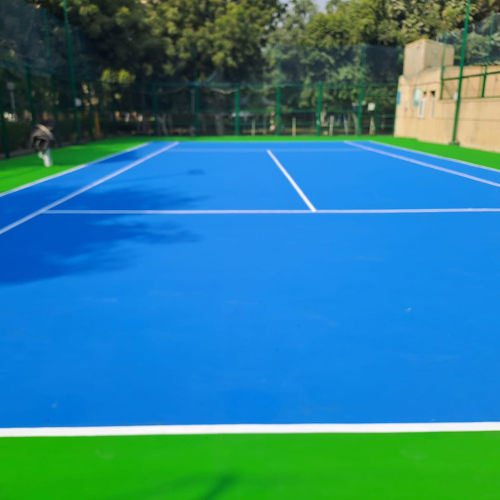
- Hard Court: Most common, using acrylic or synthetic surfaces. Durable and fast-playing.
- Clay Court: Offers slower play and higher bounce. Requires more maintenance.
- Grass Court: Traditional surface, known for its speed and low bounce.
- Indoor Court: Ideal for year-round play, often using hard court surfaces.
3. Court Dimensions:
- Singles: 78 feet (23.77 meters) long x 27 feet (8.23 meters) wide
- Doubles: 78 feet (23.77 meters) long x 36 feet (10.97 meters) wide
4. Foundation and Surface:
- Sub-base: A layer of compacted crushed stone or gravel provides a stable foundation and aids in drainage.
- Foundation: Concrete or asphalt foundation is laid over the sub-base.
- Surface: The chosen surface material (acrylic, clay, grass, etc.) is applied over the foundation.
5. Accessories:
- Net and Posts: Essential for gameplay.
- Fencing: Encloses the court and prevents stray balls.
- Lighting: Allows for nighttime play.
- Benches: Provides seating for players and spectators.
- Scoreboard: Tracks the score and match statistics.
6. Maintenance and Repair:
- Regular cleaning: Remove debris, leaves, and other contaminants.
- Surface maintenance: Depending on the surface type, this may involve watering, rolling, or resurfacing.
- Net and post maintenance: Check for tension and damage, and make necessary adjustments.
- Fence maintenance: Repair any damaged sections and keep the fence secure.
- Lighting maintenance: Clean and replace bulbs as needed.
Additional Considerations:
- Climate: Consider the local climate and choose a surface that is well-suited to the conditions.
- Budget: Determine your budget and choose materials and construction methods accordingly.
- Professional Installation: Hiring a professional tennis court builder can ensure proper construction and long-lasting results.
Cost:
The cost of tennis court construction varies depending on the size, surface type, and location. It can range from a few thousand dollars for a small, basic court to tens of thousands of dollars for a larger, more complex court.
Environmental Impact:
Consider using environmentally friendly materials and construction practices to minimize the impact on the environment.
By following these guidelines and carefully considering your specific needs, you can successfully construct a tennis court that will provide years of enjoyment.
 Send Inquiry



 Send Inquiry


 Send Inquiry